On-Page SEO Services That Help Websites Rank Higher
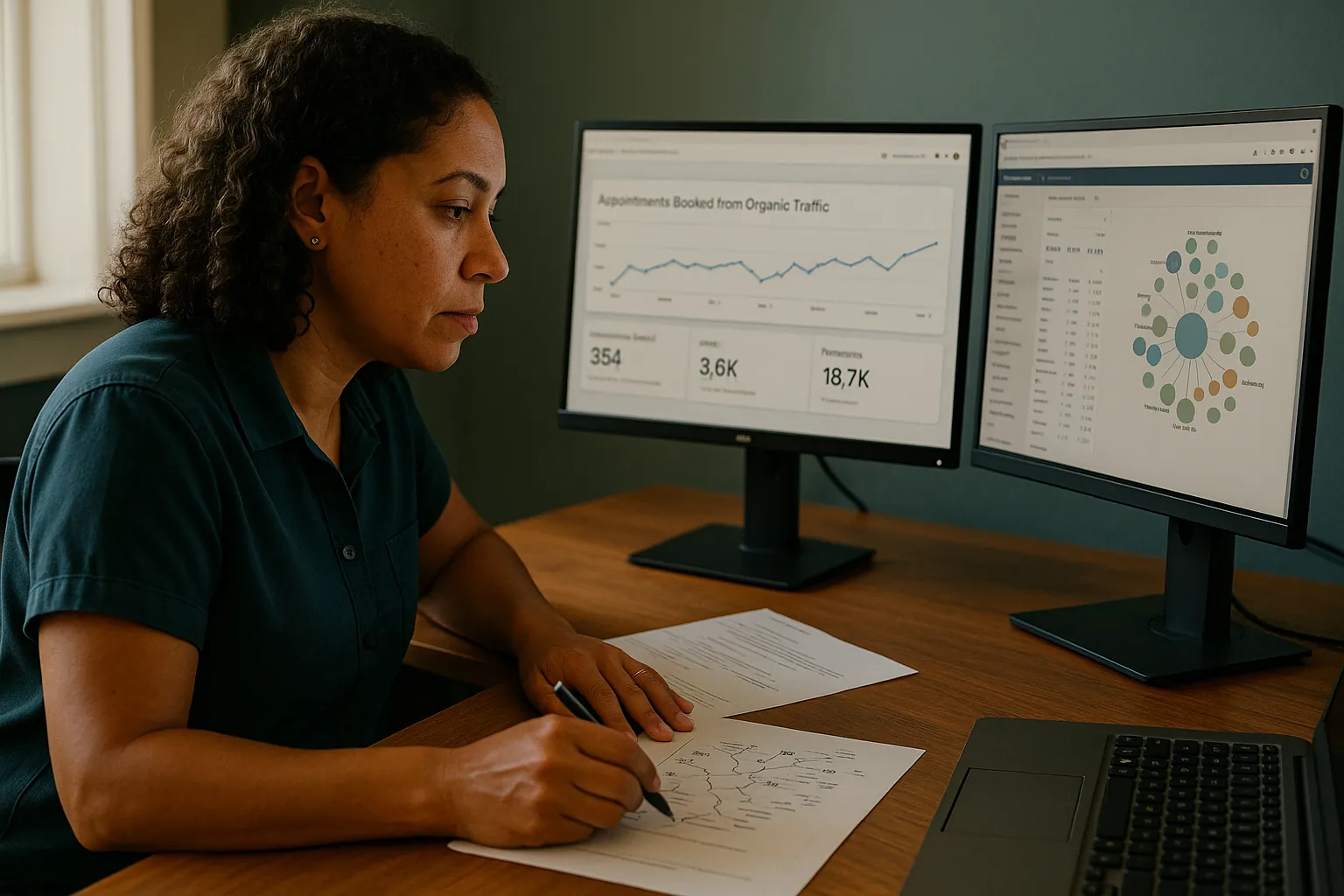
On-page SEO rarely gets the same attention as backlinks, digital PR, or technical migrations. Yet in many campaigns, it is the work that produces the fastest gains and the cleanest wins. When a website already has a decent technical foundation and at least some authority, thoughtful on-page improvements can shift rankings within weeks, sometimes days for lower-competition pages.
That is because search engines still rely heavily on page-level signals to understand relevance, depth, quality, and intent match. A page can load quickly and sit on a strong domain, yet still underperform if its title tag is vague, its headings drift off topic, its copy never answers the real query, or its internal links fail to reinforce importance. I have seen businesses spend months chasing external growth while their most valuable pages were held back by weak page structure and generic copy written for no one in particular.
Strong on-page SEO services fix that. They turn broad pages into purpose-built assets. They align content with search demand, sharpen site architecture, improve the way information is presented to users, and make it easier for search engines to interpret what deserves to rank.
What on-page SEO services actually cover
A lot of business owners hear “on-page SEO” and think of sprinkling a keyword into a few paragraphs. That view is about fifteen years out of date. Modern on-page SEO is closer to editorial strategy, information architecture, and search intent mapping than it is to old-school keyword stuffing.
At a practical level, on-page SEO services focus on the parts of a webpage you can control directly. That includes titles, meta descriptions, headers, copy, internal links, image attributes, URL structure, schema markup where appropriate, and the overall alignment between a page and the query it hopes to win. It also includes the hidden work behind those changes: keyword research, SERP analysis, content brief creation, competitor comparison, cannibalization checks, and performance measurement.
That last part matters. Good on-page work is not a one-time edit pass. It starts with diagnosis. Why is a page stuck in position nine? Why does it earn impressions but not clicks? Why does a service page attract traffic for informational terms but fail to convert? Those answers shape the work. The service is not the checklist. The service is the judgment.
Why rankings improve when page signals become clearer
Search engines are trying to solve a matching problem. A user types a query, the engine looks for pages that are relevant, trustworthy, usable, and satisfying. On-page SEO improves all four of those qualities when done properly.
Relevance gets stronger when the primary topic is obvious from the title, heading structure, body copy, and supporting entities on the page. Trust improves when content shows expertise, answers the right questions, and does not feel thin or evasive. Usability improves when the page is easy to scan, logically organized, and free from friction. Satisfaction increases when visitors find what they expected without having to dig through filler.
I once worked on a multi-location service business whose city pages all used the same recycled copy with only the place names swapped out. The site had authority, but those pages hovered between positions 12 and 25. We rebuilt them around localized search intent, added distinct service details, clarified headings, tightened title tags, improved internal links from the main service hub, and rewrote the opening copy to address actual user concerns. Over the next two months, several of those pages moved into the top five. No link building campaign launched during that period. The rankings improved because the pages finally gave search engines and users a clearer answer.
The title tag is still one of the highest-leverage elements
There is a reason experienced SEO professionals still look at title tags early. They remain one of the strongest page-level relevance signals, and they strongly influence click-through rate. A weak title can cost visibility twice, first by diluting topical clarity and second by failing to earn the click even when the page appears.
The strongest titles usually balance three things: keyword alignment, specificity, and human appeal. If every title on a site reads like “Home | Brand Name” or “Services | Company,” rankings will suffer because the pages are not telling search engines what they are about. On the other hand, titles stuffed with awkward variants often underperform because they look spammy and get rewritten.
Good on-page SEO services do not produce title tags in isolation. They review what already ranks, the phrasing users respond to, and the intent behind the query. A page targeting “emergency plumber in Bristol” should not use the same title logic as a guide targeting “how to prevent frozen pipes.” One is transactional and urgent. The other is informational and seasonal. The title needs to reflect that difference.
Meta descriptions are less direct as ranking signals, but they still matter. Better descriptions often improve click-through rate by setting a stronger expectation. When I review underperforming pages, I often find descriptions that either duplicate the title or waste space on empty branding. A sharp description can add just enough context to win the click from a crowded search result.
Search intent is where many pages go wrong
A page can mention the right keyword dozens of times and still fail because it does not satisfy intent. This is one of the most common issues in on-page SEO, especially for businesses that publish content based on keyword volume alone.
If users searching a term expect a comparison page, a product page may struggle. If they expect a service landing page, a long educational guide may never break through. Search engines infer this intent from user behavior and from the pages already ranking. That is why competent SEO Services begin with SERP review, not just keyword export.
For example, a software company may want to rank a feature page for “project management software for SEO Services agencies.” If the search results mostly show category pages, list pages, and product comparisons, then a thin feature page probably is not the right asset. It may need customer use cases, pricing context, comparison sections, and proof points that match the decision stage of the searcher.
On-page SEO work in this situation is not merely editing text. It is repositioning the page to fit the search landscape. Sometimes that means expanding content. Sometimes it means narrowing the angle. Sometimes it means admitting the wrong page is being optimized and building a better one.
Content quality is not about length, it is about completeness
There is still a persistent myth that longer pages rank better by default. In reality, pages rank when they cover a topic at the right depth for the query. Some winning pages need 500 words. Others need 2,500. Word count is not the strategy.
What matters is whether the content answers the actual questions behind the search. Does a service page explain process, pricing approach, timelines, trust signals, and common objections? Does a category page help users compare options quickly? Does a local page include location-specific relevance rather than boilerplate? Does a guide add original insight, examples, or practical detail that makes it genuinely useful?
Thin content often reveals itself in familiar ways. It circles around the topic without saying much. It repeats the keyword mechanically. It lacks examples, proof, or specifics. It reads as though written to occupy a page rather than help a user make a decision.
Professional on-page SEO services improve this by building better briefs and better page architecture before a writer touches the draft. They identify the subtopics that need coverage, the questions worth answering, the proof points that should be included, and the places where conversion elements should support the user without overwhelming them.
Internal linking is a ranking lever most sites underuse
Internal links do more than help users navigate. They distribute authority, reinforce topical relationships, and signal page importance. Yet internal linking is often handled casually, especially on growing sites where pages are added over time without a clear structure.
I often see websites where the highest-value commercial pages are buried three or four clicks deep and receive almost no contextual links from related content. Meanwhile, low-priority blog posts are heavily cross-linked because they were easier to reference. That imbalance can hold back the pages that matter most.
Strong on-page SEO services map internal linking intentionally. They look at hub pages, supporting pages, and the anchor text patterns that help define those relationships. A well-structured site makes it obvious which pages are cornerstone resources, which pages support them, and how users should move through the journey.
A simple internal linking improvement can have an outsized effect. On one B2B site, we added targeted links from high-traffic educational articles into neglected service pages, revised anchor text to reflect the target topics more clearly, and improved the service page copy to match that context. Rankings rose, but so did assisted conversions, because the right users were finally reaching the pages built to convert.
Headings, formatting, and readability matter more than teams expect
Search engines do not rank pages because they use neat formatting, but formatting affects comprehension, engagement, and the clarity of information hierarchy. That makes it part of effective on-page work.
A page with a clear H1, logical H2s, concise paragraphs, and well-placed supporting detail is easier for users to scan and easier for search engines to interpret. Dense blocks of text can suppress engagement, particularly on mobile. At the same time, over-formatting can make content feel fragmented and shallow.
This is where experienced judgment matters. A legal service page should not be written like a lifestyle blog. A medical information page should not sound promotional. A product page should not bury key buying details under long introductory copy. The right structure depends on the query, the industry, and the decision stage.
Formatting is also one area where weak SEO Services often reveal themselves. If every page gets the same template, the same subheadings, and the same “optimized” length, the result may look organized but perform poorly. Pages should be shaped by intent, not by a production system.
The pages that usually need attention first
Not every page deserves equal investment at the same moment. One of the most valuable parts of on-page SEO is prioritization. The pages with the highest upside are often not the ones with the lowest rankings. They are the ones close to page one, the ones already earning impressions, or the ones tied directly to revenue.
When I scope an engagement, I usually focus first on this set of opportunities:
- commercial pages ranking between positions 5 and 20 for meaningful terms
- pages with high impressions but weak click-through rates
- pages attracting traffic for the wrong intent
- overlapping pages that compete with each other
- legacy content with strong backlinks but outdated on-page relevance
That mix tends to create early momentum. Small gains on valuable pages usually outperform broad edits across dozens of low-priority URLs.
Cannibalization is often an on-page problem in disguise
Keyword cannibalization gets talked about as though it were a technical bug. More often, it is a content strategy issue expressed at the page level. Multiple pages target the same theme with slight variations, and search engines struggle to determine which one should rank.
This shows up on service sites, ecommerce stores, SaaS websites, and publishers alike. One page targets “accounting software for small business,” another targets “small business accounting platform,” and a third targets “best software for small business accounting.” None of them is clearly distinguished by intent or depth. Rankings fluctuate. The wrong page surfaces. Performance stalls.
On-page SEO services address this by clarifying page purpose. Sometimes pages should be merged. Sometimes one should become the primary commercial page while others support it with adjacent informational angles. Sometimes the fix is better internal linking and clearer heading language. The right answer depends on intent and business goals, not SEO Services just keyword similarity.
Local, ecommerce, and B2B sites need different on-page strategies
The phrase “on-page SEO” covers a wide range of realities. A local plumber, a national ecommerce retailer, and a B2B software firm all need strong page optimization, but the way that work looks in practice differs considerably.
For local businesses, the emphasis is often on service pages, location relevance, trust signals, service area clarity, and reducing duplicate content across city pages. Reviews, local proof, and practical conversion cues tend to matter alongside keyword targeting.
For ecommerce, category pages carry enormous weight. Product taxonomy, filter handling, category copy, titles, faceted navigation signals, and internal links all shape performance. Product pages matter too, especially for long-tail searches, but category architecture often drives the larger traffic gains.
For B2B and professional services, the challenge is frequently intent alignment and expertise signaling. Buyers are cautious, research-heavy, and often evaluating complex offerings. Pages need clear positioning, strong differentiation, proof, and language that reflects how the audience actually searches. Generic “solutions” copy tends to fail here because it says everything and nothing at the same time.
This is one reason cookie-cutter SEO Services often disappoint. If the same optimization formula is applied across every business model, the work may check boxes without solving the ranking problem.
What a strong on-page SEO process looks like
The best providers do not jump straight into rewrites. They start by understanding the site, the market, and the gap between current performance and realistic opportunity. That process should feel analytical, not theatrical.
A sound workflow usually includes a performance review, SERP and competitor analysis, keyword and intent mapping, page-level recommendations, implementation, and follow-up measurement. It should also account for business priorities. There is no point improving low-value pages first just because they are easier to edit.
The most useful deliverables from on-page SEO services tend to include:
- prioritized page recommendations tied to traffic or revenue potential
- rewritten titles, meta descriptions, and heading structures
- content briefs or page copy recommendations grounded in search intent
- internal linking guidance based on site architecture
- before-and-after reporting that connects changes to outcomes
Anything less is often hard to act on. I have seen businesses receive giant audit documents full of generic observations but almost no page-level direction. Those reports create the appearance of strategy while leaving the implementation team to guess.
Measuring success without oversimplifying it
Rankings matter, but they are not the only measure that counts. A page moving from position 11 to 6 is progress, even if it has not hit the top three yet. A title change that lifts click-through rate from 2.1 percent to 3.8 percent can be meaningful even if average position holds steady. A service page attracting fewer visits but generating more leads may be healthier than a broader page pulling in low-intent traffic.
This is where mature reporting makes a difference. Good on-page SEO services track impressions, clicks, average position, click-through rate, conversions, and assisted conversions where possible. They also look at query shifts. Are pages earning visibility for the intended keywords, or just adjacent informational phrases?
One caution here: not every on-page change produces an immediate jump. Some updates trigger fast movement, especially when pages were obviously misaligned. Others take longer, particularly in competitive verticals or on sites with weak authority. That does not mean the work lacks value. It means page quality and domain strength still interact. On-page SEO is powerful, but it is not magic.
Common mistakes that hold websites back
The biggest errors tend to come from extremes. Some teams neglect on-page basics entirely. Others over-optimize to the point that pages become awkward, repetitive, and less persuasive.
I regularly see pages where every subheading is a keyword variant, every paragraph repeats the same phrase, and the copy loses all sense of natural communication. Search engines have become much better at understanding topic relationships. Exact-match repetition is rarely the advantage people think it is.
The reverse mistake is equally common. Brand teams sometimes polish copy until it sounds elegant but vague, removing the language real users actually search. If a financial advisory firm refuses to say “retirement planning” because it prefers “future lifestyle design,” it should not be surprised when rankings lag.
The right balance is simple to describe and harder to execute: write with enough specificity to align with demand, enough clarity to serve the user, and enough restraint to keep the page credible.
Choosing on-page SEO services that are worth paying for
If you are evaluating providers, look beyond the sales language. Ask how they identify page priorities. Ask to see examples of title rewrites, content recommendations, and internal linking plans. Ask how they handle intent mismatches, cannibalization, and pages that rank for the wrong queries. Ask what happens after recommendations are delivered.
The strongest providers tend to speak concretely. They can explain why a page is underperforming, what changes they would test, and what outcomes are realistic. They understand that a local service page, a category page, and a long-form guide require different treatment. They also know when not to change something. Restraint is often a sign of experience.
On-page SEO is one of the few areas in search where careful work can improve rankings, traffic quality, and conversion performance at the same time. When pages are built around genuine search intent, supported by strong structure, and written with precision, they become easier to rank and more useful to the people landing on them.
That is the real value of on-page SEO services. They do not just make pages look optimized. They make them clearer, stronger, and more competitive where it counts.
Magister Digital AI
1135 Garnet Ave #13, San Diego, CA 92109
+16193300953
FAQ About SEO Services
What do SEO services include?
SEO services can include technical site reviews, keyword and search-intent research, content improvement, internal linking, local optimization, structured data, and performance reporting. The exact scope should reflect the business, market, and goals.
How long does SEO take to show results?
Timing varies with the website's current condition, competition, and scope. Technical improvements may show movement sooner, while competitive content and authority work often require several months of consistent effort.
Do SEO services include local SEO?
They can. Local SEO commonly covers Google Business Profile optimization, accurate business citations, local schema, reviews, and service-area or location content when those elements are relevant.
How should SEO performance be measured?
Useful measures include qualified organic traffic, calls, form submissions, booked appointments, revenue influence, and visibility for searches that matter to the business. Rankings alone do not show the full outcome.